1. The Varcio FinOps Framework: Visibility, Prevention & Unit Economics
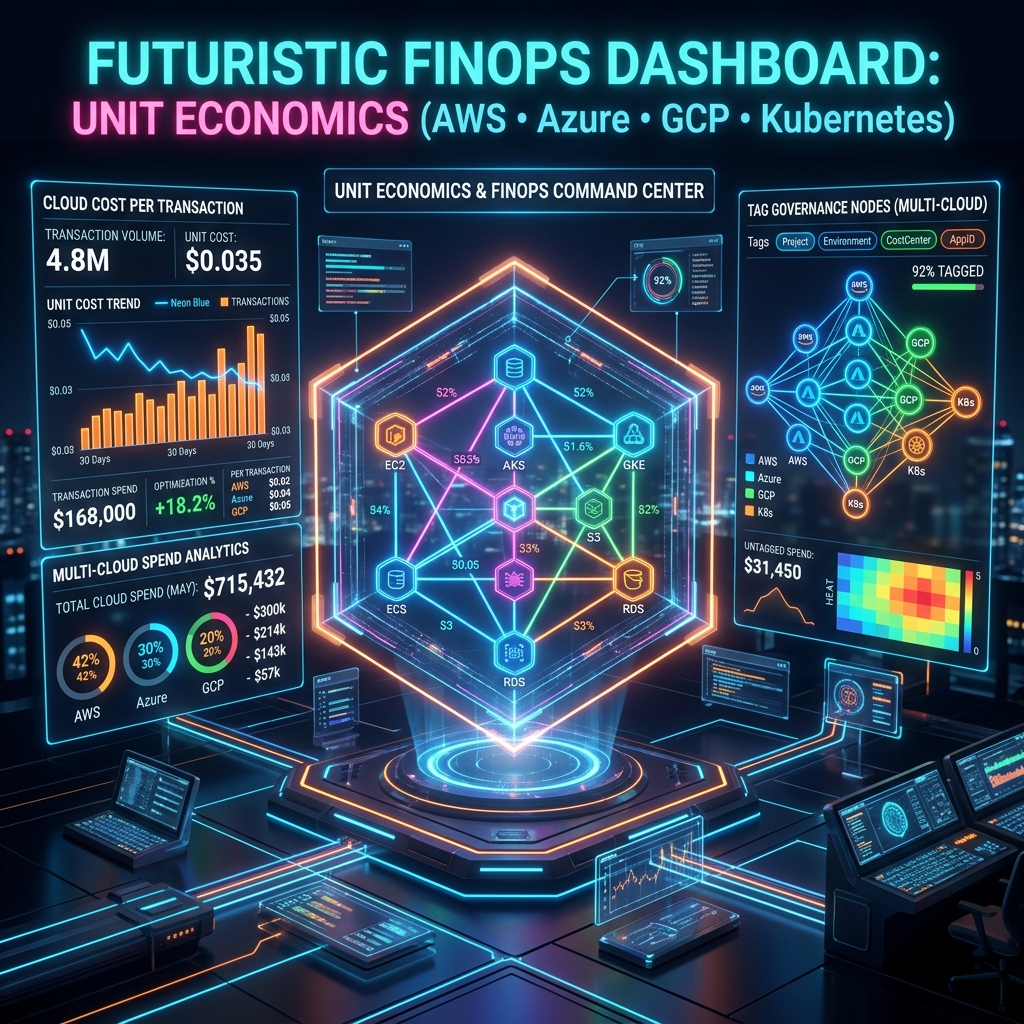
In modern multi-cloud architectures spanning AWS, Microsoft Azure, Google Cloud, OCI, and Kubernetes, raw billing totals fail to answer critical business questions. Technology leaders need to understand unit cost economics: What is the exact cloud cost per active subscriber, per checkout transaction, or per ML inference pipeline?
The Varcio FinOps Framework provides end-to-end visibility, automated waste prevention, and granular allocation across engineering teams and business units.
Shift FinOps Left: Prevent Waste Before Terraform Merges.
Varcio integrates automated Pull Request cost reviews into CI/CD pipelines, preventing over-provisioned infrastructure from reaching production environments while establishing strict multi-cloud tag governance.
2. Tag Governance & Pull Request Cost Reviews
The most effective cost optimization strategy is preventing waste before it is provisioned. Varcio implements PR cost estimation bots in GitHub Actions and GitLab CI that calculate estimated monthly cost diffs on Terraform plans.
// Example Varcio CI/CD Pull Request Cost Review Action
name: Varcio PR Cost Estimator
on: [pull_request]
jobs:
  finops-check:
    runs-on: ubuntu-latest
    steps:
      - uses: varcio/finops-action@v2
        with:
          varcioToken: ${{ secrets.VARCIO_API_TOKEN }}
          terraformPlan: ./tfplan.json
          maxCostIncreaseMonthly: 500 # Triggers required manager sign-off if diff > $500/mo
3. Tracking Unit Economics Across Containerized Workloads
Varcio correlates raw cloud invoices with application telemetry to calculate Unit Economic Metrics across Kubernetes namespaces, pod daemonsets, and serverless invocations.